
Singapore's life insurers are moving their servicing communications to screens, and the industry's own guidelines set the terms of the move. An insurer may default its policyholders to e-statements, but only after telling them so on paper, and only if every one of them can change their mind later. Paper in insurance is not a volume winding down to zero.
Going paperless starts with a letter on paper
The Life Insurance Association's Guidelines on E-Statements and Practices to Prevent Unintended Lapsation of Policies give an insurer two routes out of hardcopy, and both carry a condition. Paragraph 12 sets them out: either inform policyholders and offer a choice to opt in to e-copy, or "first inform your policyholders using hardcopy communication of the impending change-over to e-copy on a default basis, and provide your policyholders a choice to opt out". Whichever route is taken, a third limb applies: "Allow your policyholders to change their choice at any time." Paragraph 13 extends that right backwards, to everyone switched before the guidelines existed.
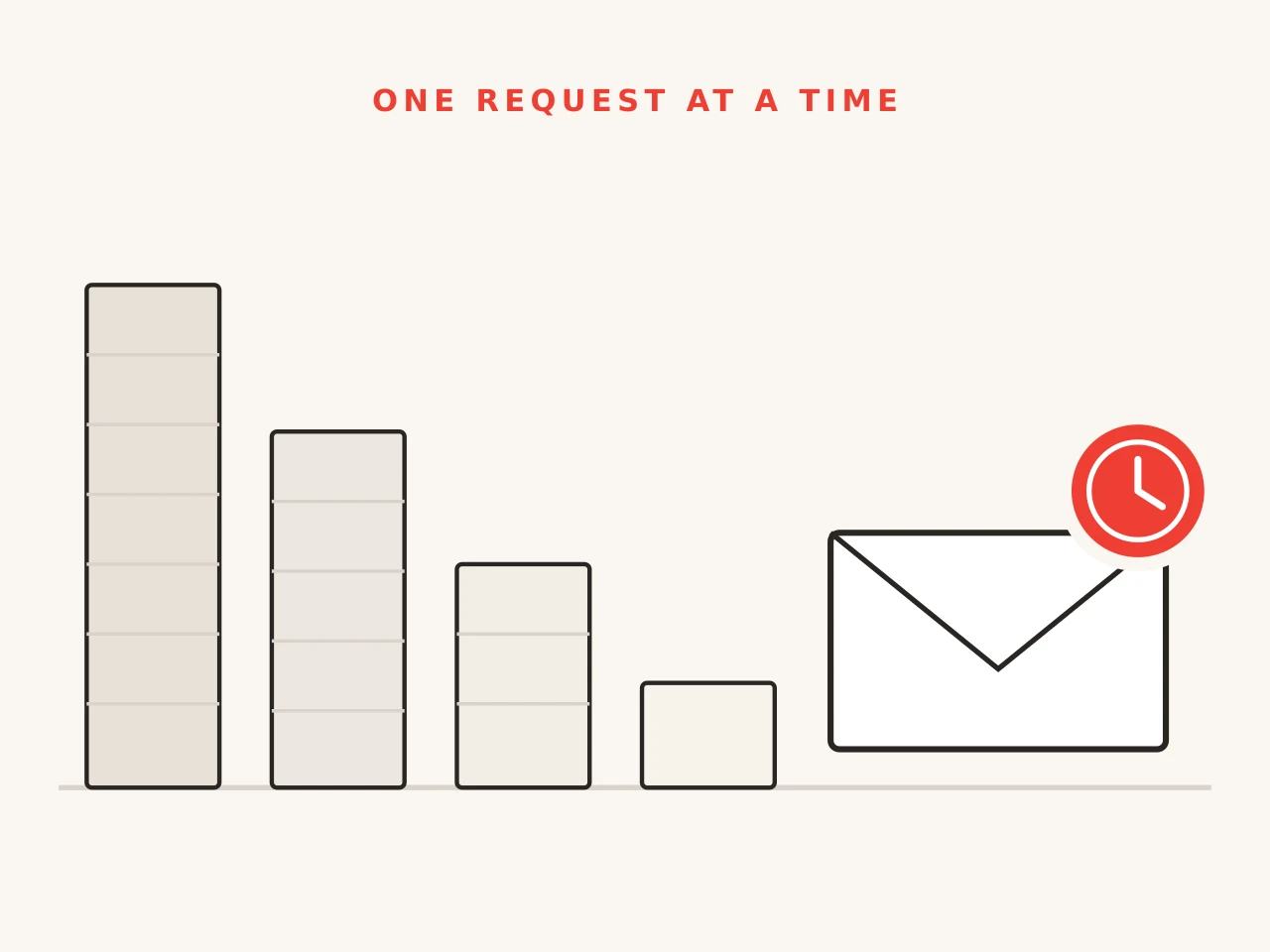
So the hardcopy population never closes. It shrinks by choice and can grow back by choice, and the guidelines state the intent plainly: "communications should be given to policyholders in a mode of their choice so that they will be readily received." LIA announced them in its March 2025 statement of priorities, framed around "ensuring that seniors and those less digitally savvy are not left behind". They cover individual life and individual health policies; group policies sit outside them.
Our read is that this changes what the remaining paper is. It is no longer a residue of people nobody has got around to migrating. It is a list of people who were asked and said no, which is a harder list to be wrong about.
When the consequence is lost cover, one channel is not enough
The guidelines raise the channel requirement at the point where a missed message costs someone their cover. Paragraph 19 requires notice of a premium falling due through "at least one (1) mode of communication, e.g. Hardcopy, email, SMS or App notification". For notification of policy lapse, the same table requires "two (2) different modes of communication". Paragraph 20 then adds the line that concerns whoever produces the mail: "For each lapsed policy, the insurer must make a record of such efforts made to serve as evidence, when required."
The record is per lapsed policy, not per run. Most mailing reconciliation is run-level, so many records in and so many pieces lodged, and a run-level count cannot answer a question about one policyholder. Evidence for a named policy means the policy number has to survive from the data file through production and into the lodgement record. In our experience that is settled when the file format is agreed, and cannot be reconstructed once the run has closed.
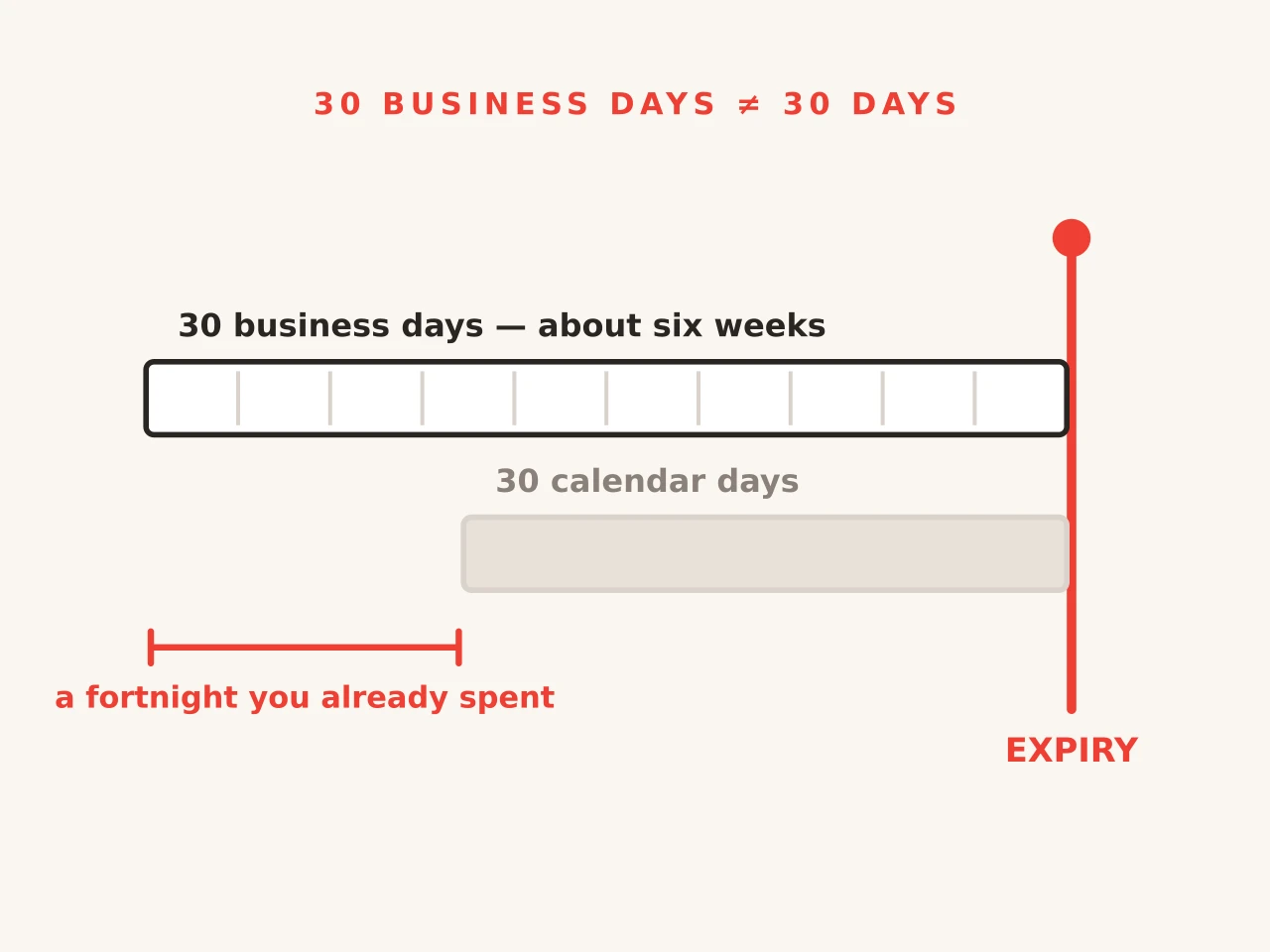
The dates attached to these notices are their own problem, and they are counted in business days rather than calendar days. We work through the renewal and response calendar in a companion piece on insurance deadlines.
You stay accountable for whoever prints it
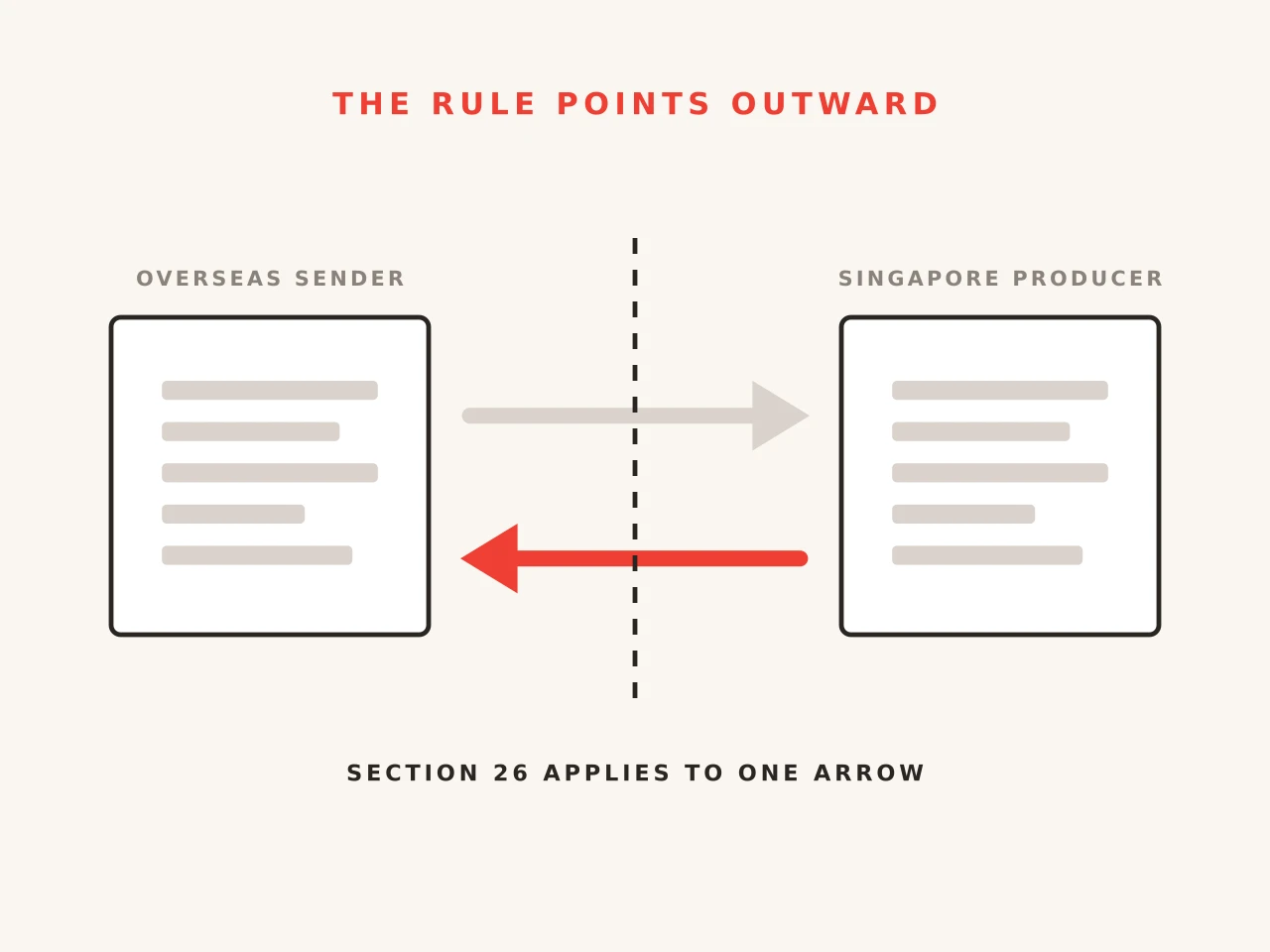
Singapore's life insurers have already answered this question in their own privacy notices. LIA's Code of Practice for Life Insurers on the PDPA, MU 61/15 of 1 April 2015, names print vendors in the standard disclosure list: personal data may go "To 3rd party vendors engaged by us to perform processes required for the administration of your plan or policy (e.g. data entry, printing and despatch of documents, claims administration, etc)". A footnote to the same code settles where the obligation sits: "Legal responsibility for complying with the PDPA remains with the life insurer." What the vendor relationship buys is not a transfer of that duty but a set of controls you can inspect and write into a contract.
The code's retention table sets the minimum retention period for servicing a policy still in force at the "Lifetime of the policy". A whole-life policy written to a thirty-year-old creates a mailing address the insurer is expected to keep serviceable for fifty years, and through every house move inside them. It is also the field the lapsation guidelines blame for unintended lapses, because a postal address is the one contact detail never corrected in passing.
On the print side that means encrypted transfer, restricted access and a purge after production, which sit with secure data printing, and recipient matching verified piece by piece, which sits with lettershopping. One point of precision, because insurance buyers ask: our mailroom, messaging and local courier services are audited under the ABS OSPAR programme, a banking-sector framework that does not extend to printing or lettershopping. Insurance questions about print are PDPA questions and deserve a PDPA answer.
What to do with the floor
The hardcopy population in Singapore insurance is small, self-selected and permanently reopenable, and every piece of it carries a named policyholder and a date that matters. Four things are worth doing whoever produces the work.
- Separate the communications you send by policyholder choice from the ones you still send by default. Under paragraph 12 those are different populations, and only one can be migrated.
- Decide now what evidence a single lapsed policy would produce. If the answer is a run-level count, paragraph 20 is not yet satisfied.
- Ask what your second channel on lapse notification actually is, and whether it is the one that reaches the people who chose hardcopy in the first place.
- Give the postal address field an owner and exercise it. It is the only contact detail with a retention horizon measured in decades and no routine reason to be checked.
This article describes published industry guidelines and policy wordings for general information and is not legal or compliance advice. Positions cited are current as at 6 August 2026. The LIA e-statements guidelines are issued for adoption by insurers and carry no commencement date in the published document.
Tags