Industry Trends
The Letterbox Was There Before You Were: Singapore's Quietest Piece of Infrastructure
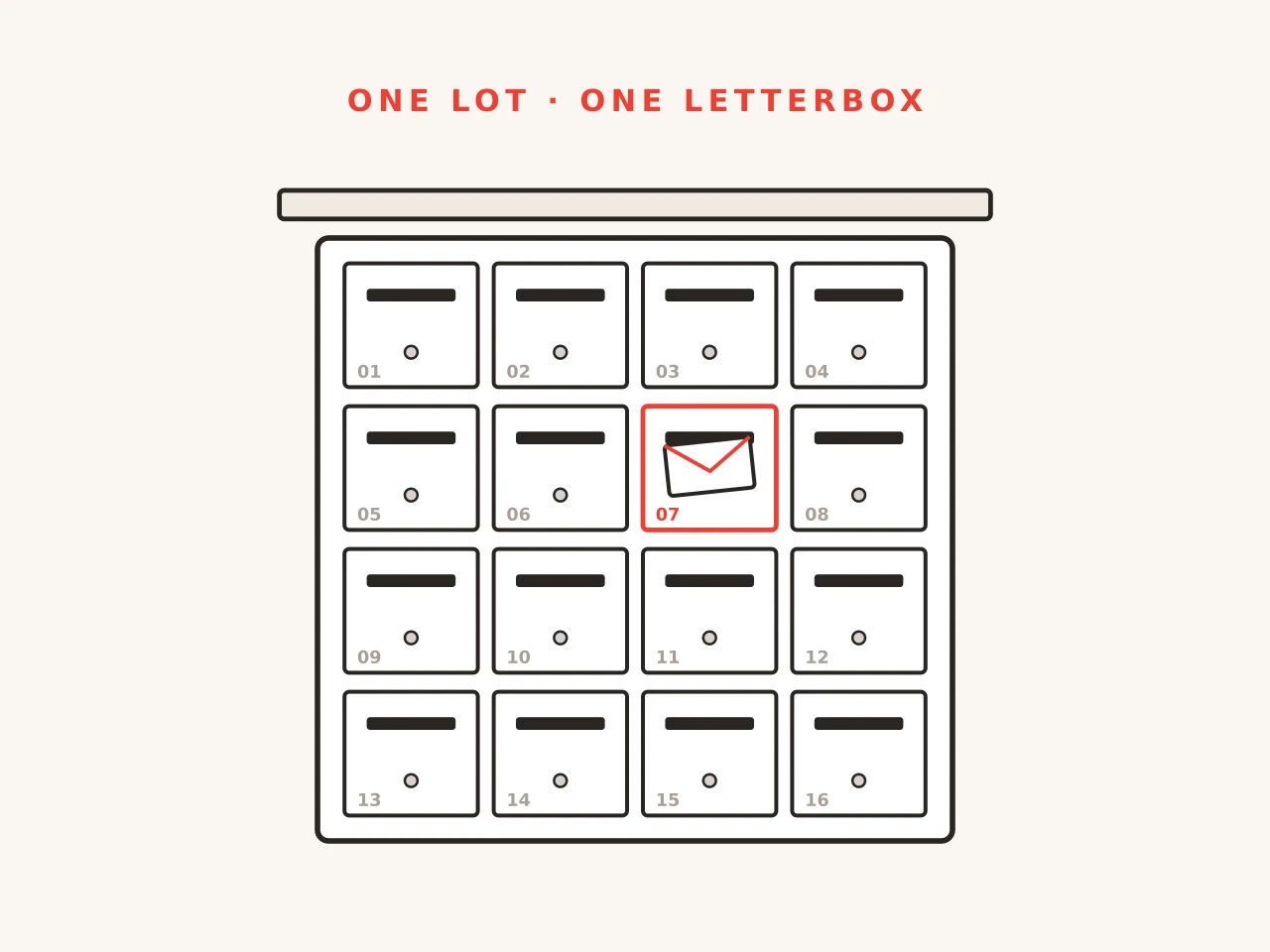
Every home in Singapore has a letterbox, numbered and fitted before anyone moved in, because the law required the developer to put it there. That is an unusual thing to be able to say about a communication channel, and it is the reason addressed mail still reaches people that nothing else does.
National Day is a reasonable moment to look at it, because the letterbox is one of the things the country built and then stopped noticing.
Every home gets a letterbox before it gets a resident
The obligation sits with the developer, not the postman. IMDA's Letter Box Specifications and Guidelines, issued under section 16 of the Postal Services Act, require a developer of a residential, commercial or industrial building to "Provide one letter box for each lot within any residential building" and to "Ensure that the letter boxes in (a) are numbered in numerical sequence".
The timing is the part worth noticing. The same document states that "The letter boxes are to be installed before the occupants move into the building", and that "One letter box is to be provided for each official address approved by Property Tax Department, Inland Revenue Authority of Singapore".
Read those together and the letterbox is provisioned the way a water point is. It is fitted at construction, indexed to the national address register, and specified down to aperture, ledge and numbering sequence. The resident arrives afterwards and inherits it.
The guarantee attaches to the address, not to the person
A letterbox is only worth having if something is obliged to arrive at it, and in Singapore something is. Answering a parliamentary question in March 2024, MDDI described SingPost's duty as Public Postal Licensee as being to "deliver letters to every addressable place in Singapore", alongside maintaining posting boxes and post offices and meeting the regulator's service standards. An earlier reply set those standards out: 99% of local basic letters destined for the Central Business District and 98% for non-CBD areas by the next working day, and 100% by the second.
What matters commercially is what that guarantee is attached to. An email address, a mobile number and an app install all belong to a person, and any of them can be changed, filtered or abandoned without telling you. A letterbox belongs to a dwelling. It does not move when the resident does, it cannot be unsubscribed, and it exists whether or not anybody has put anything in it.
Digital-first is the right default, and it still leaves a gap
Nothing above argues against digital, and a mail company that pretended otherwise would not be worth reading. GovTech puts Singpass at "over 2,700 services across 800 government agencies and businesses", handling more than 41 million transactions a month. Open Government Products built LetterSG to support "Singapore's move towards paperless government" by issuing official letters through secure .gov.sg links. That direction is settled.
The channel is shrinking to match. SingPost's FY25/26 results record a "13.5% structural decline in traditional domestic letter mail volumes" in a single year.
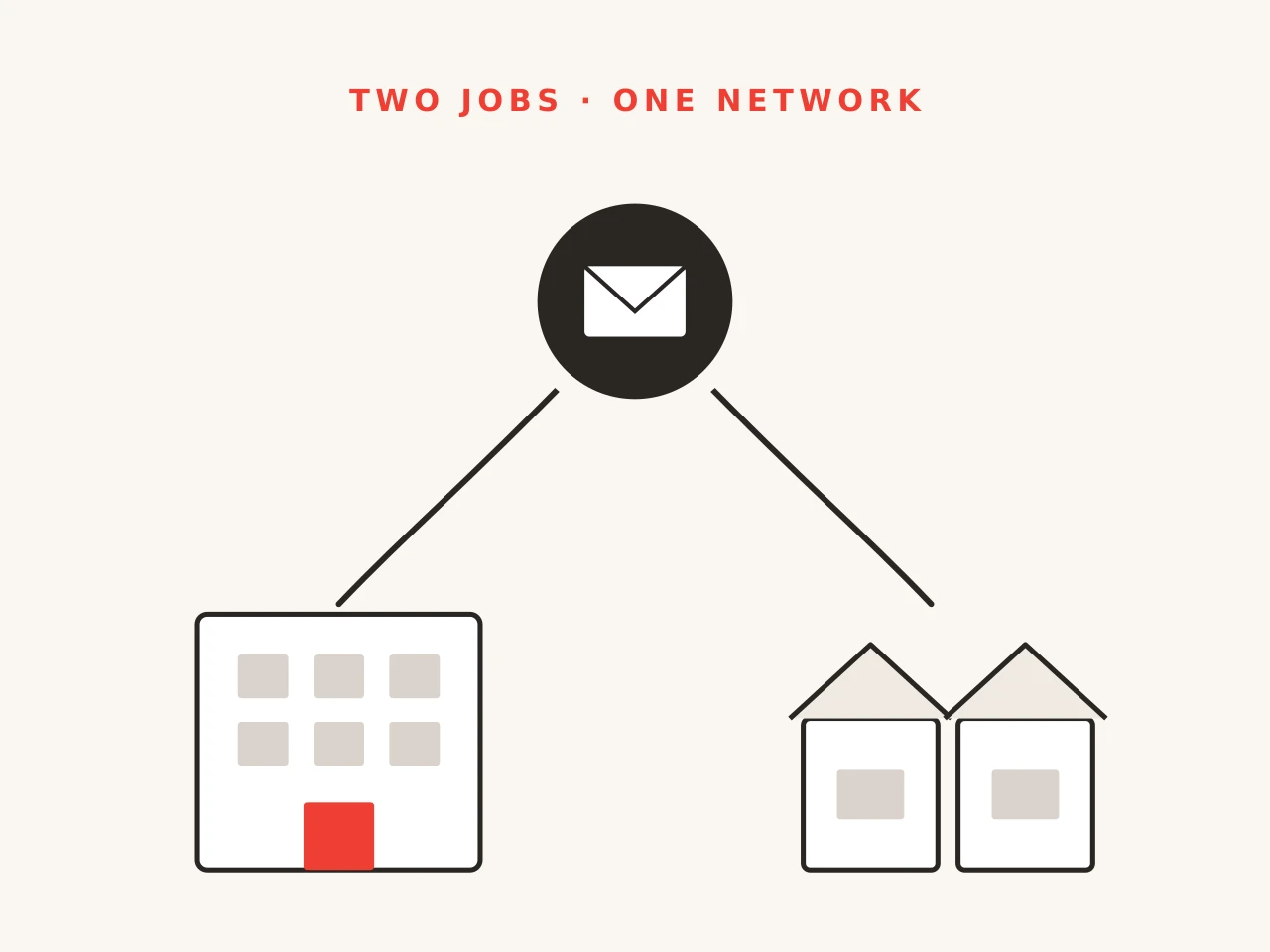
What digital does not do is reach the people it has no verified channel for, or the ones who have not agreed to be reached that way. Those recipients do not announce themselves, and they are the reason the physical path stays open. We have set out what the shrinking channel does to postal economics in two jobs, one network; the point here is narrower. The reach is guaranteed by licence. Whether you use it well is entirely your side of the transaction.
Which makes the address file the part that decides delivery
The reach guarantee stops at the address. It says nothing about whether the address on your pack is one that still corresponds to a box, and that is where mail is actually lost.
Our own read, from production rather than from the rules: the addresses that fail are rarely the ones that look wrong. They are the ones that look fine. A unit number dropped somewhere between a client's database and the export we receive still produces a plausible, well-formed address, and the piece still reaches the right block. Then it stops, because a nest is organised by unit and there is nothing to sort it into. Nobody reading that line would spot the problem, because there is nothing visibly wrong with it. Checking that unit numbers survived the export, for every multi-tenanted address in the file, is a two-minute step that has no equivalent on the digital side.
Address hygiene is the highest-return step available in a mail budget, and we have set out the arithmetic in where a Singapore postage bill actually comes down. The letterbox adds one thing to that argument. The network will do its part for every address in the country, so accuracy of the file is not one variable among several. It is the one you control.
What to check before the next mailing
Three things, in the order they go wrong:
- Unit numbers, for every multi-tenanted address. Confirm they survived the export, not just that the address looks complete.
- The deduplicated count, before print rather than after. The same recipient held twice in slightly different formats is paid for twice and delivers once.
- Which items are date-certain. Anything running to a statutory or contractual deadline deserves its own schedule, and the lodgement record that goes with it, which is where fulfilment and logistics does its work.
Our National Day film this year follows a single letter across sixty years of Singapore addresses: a kampung door, a weathered nest of letterboxes, an empty new flat, a corridor at dusk. Different years and different people, and the same numbered box waiting at the bottom of the block.
If you send anything that has to arrive, that box is already there and already yours to reach. The address file is where the promise is kept or lost.
Letterbox requirements are quoted from IMDA's Letter Box Specifications and Guidelines, issued under section 16 of the Postal Services Act. Service obligations and quality standards are from MDDI parliamentary replies as cited, and volume figures from SingPost's FY25/26 results. All current as at 8 August 2026.
Tags