Marketing & Engagement
The Channel Do Not Call Left Open: Property Mail in Singapore
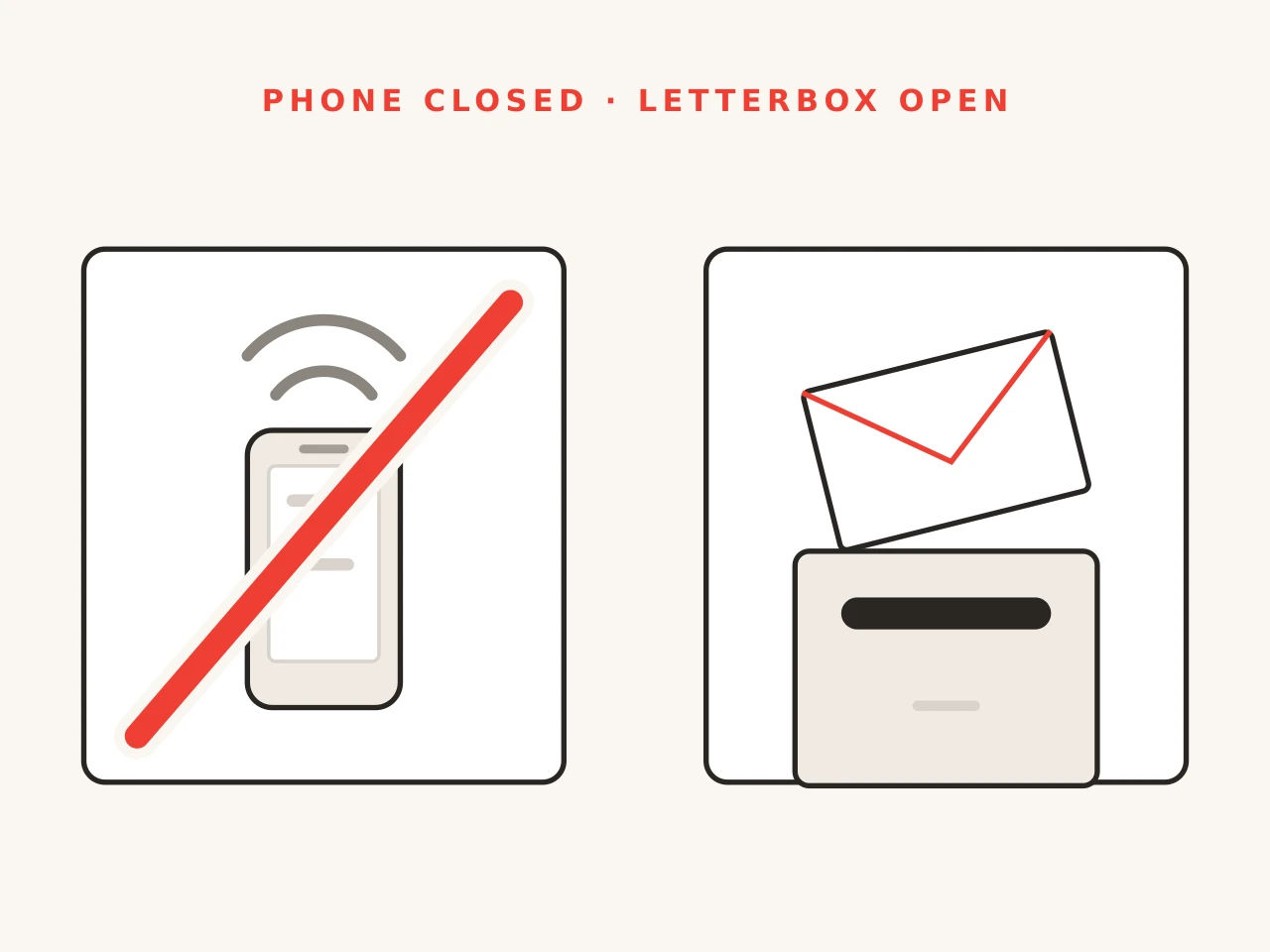
Singapore has closed the cheap prospecting channels for property agents one at a time, and for good reasons. Cold calls and cold SMS went to the Do Not Call registers. From 1 April 2026 the corridor drop became a breach the industry logs and penalises. What is left is post, and it comes in two legally distinct forms that agencies routinely confuse.
The Do Not Call rules closed the phone, not the letterbox
PDPC issued Advisory Guidelines for the Real Estate Agency Sector on 16 May 2014, in consultation with the Council for Estate Agencies. They are blunt about what does not entitle a salesperson to make a marketing call. Buying a database of numbers and calling one is a specified message. So is calling a past client two years later to ask whether they would like to sell. Paragraph 5.5 closes the workaround: "one-off interactions or transactions in themselves" do not establish an ongoing relationship.
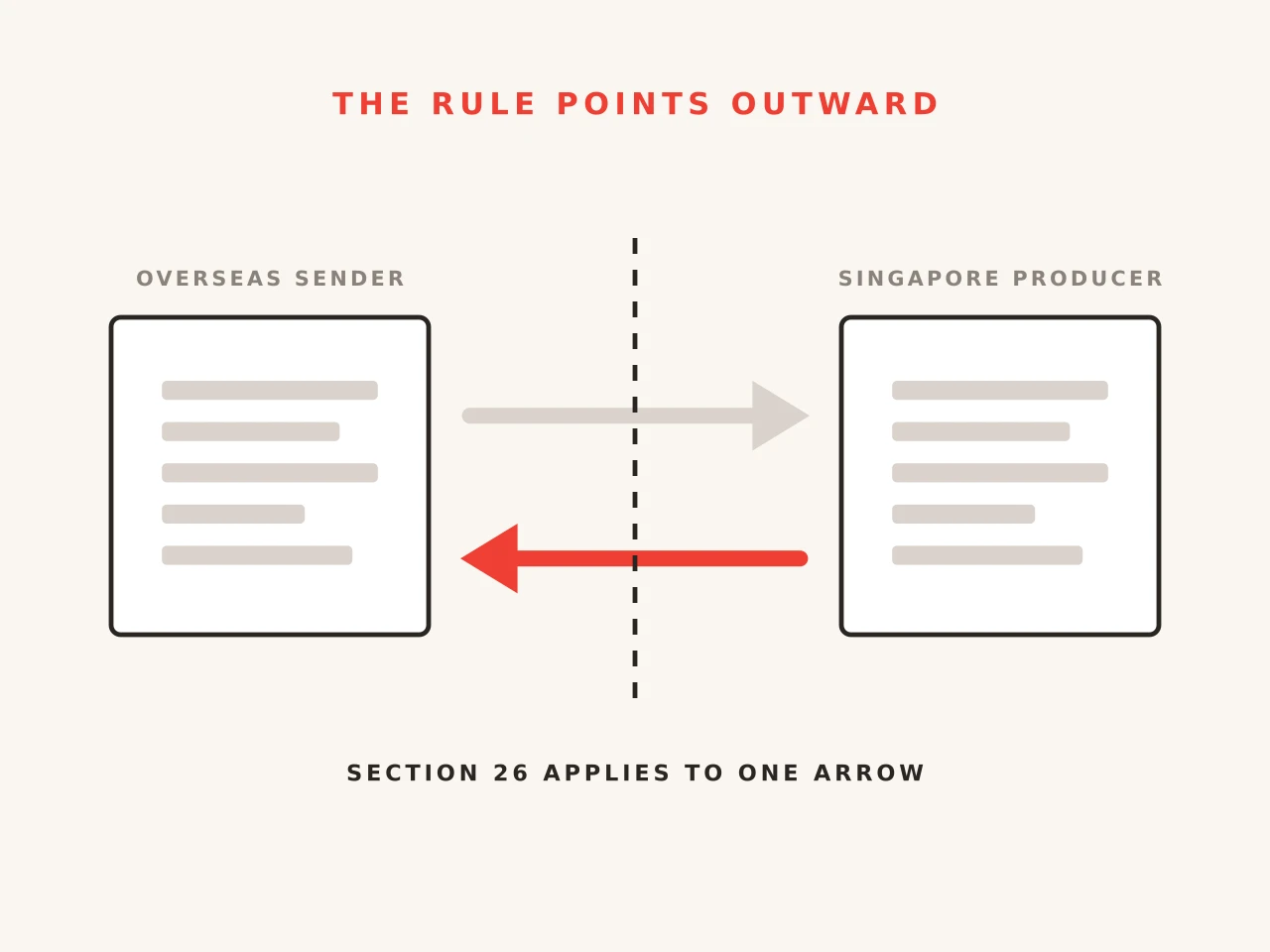
The scope is narrower than it reads. Paragraph 5.2 applies the Do Not Call provisions to a specified message "addressed to a Singapore telephone number". Mailing that same past client is governed instead by the ordinary rules on using their name and address.
Paragraph 4.2 works through an agency using its client database "to send them flyers on new launches", and calls it a reasonable purpose. That covers data collected before the Act's appointed day. For data collected since, consent for the intended purposes has to have been obtained. So the letter is not exempt. It carries an obligation an agency can actually satisfy.
Two mail products, and only one of them touches personal data
PDPC draws the boundary with two matched examples. It is a legal boundary, not a budget one.
Take paragraph 2.6. An agency distributes flyers "to all the mailboxes of properties located in the vicinity of the new launch", addressed generically to "The Resident". It has not collected or used anyone's personal data. Now take paragraph 2.7. An agency "mails flyers specifically to former clients of its salespersons by using the name and address of the former clients". It has.
Unaddressed area coverage is the simplest thing a property marketer can lawfully do, because no personal data is in play. SingPost Admail reaches more than 1.5 million letterboxes, with targeting by geographic area or housing type. For a blanket new-launch drop it is the right tool. Cheap per piece, and weak per piece.
Addressed mail is the other product, and in Singapore it means your own list. SLA's title search returns ownership one title at a time, for a fee. Paragraph 3.5 takes an agency marketing an en-bloc sale, which had compiled owners' names and addresses from title searches, the management corporation and neighbours. PDPC's conclusion: the data protection provisions apply, and consent is needed unless an exception does. So the honest version of hyper-local targeting here is a defensible list of people who already know you, not a postal sector.
From 1 April 2026, how a flyer is delivered can get an agent suspended
The rule itself is fifteen years old. CEA's Practice Guidelines on Ethical Advertising, still current, say at paragraph 4.1 that flyers and pamphlets "must be properly distributed without being visible to members of the public other than the intended recipient(s)". CEA restated it in a 2021 advisory, adding that approvals must be sought before distributing inside private property such as condominiums.
What changed this year is enforcement. On 13 February 2026 the Singapore Institute of Estate Agents announced an MOU signed by an Alliance for Action on proper flyer distribution to HDB homes. The parties are PropNex Realty, ERA Realty Network, Huttons Asia, OrangeTee & Tie and SRI, with CEA supporting it. From 1 April 2026, flyers must reach the recipient without being visible to anyone else, "such as by placing flyers in mailboxes (e.g. by Singpost or flyer distributors)". SIEA holds the master record of breaches, so a salesperson's history follows them between agencies. Mothership, reporting the framework, described a ladder running from a letter of caution to a mandatory course to a six-month suspension.
CEA has its own enforcement track, and it is older than the MOU. Practice Circular PC 07-18, in force since 1 November 2018, lists six "Type A" advertisement infringements. Every estate agent has to investigate one itself when CEA refers a complaint, and report back within four weeks. Three of the six are things a fulfilment partner controls:
- "Improper distribution of flyers (e.g. Doorsteps / iron grille gate/ Cars)"
- "Advertisements / flyers with missing or wrong information (e.g. company information, registration number of salesperson, contact number)"
- "Using business names /titles that cannot be substantiated (e.g. claim of expertise/specialist/king)"
CEA reports that devolving this work to the larger agencies cut Type A complaints by about 70 per cent over four years. One clause in paragraph 4.1 explains why the partner matters here. Where a third party is engaged to distribute, the agent "must issue proper instructions to the third party" to ensure compliance. Briefing the distributor is the agency's job, and it belongs on the job sheet.
The flyer is a compliance artefact before it is a marketing one
Every property flyer carries a mandatory identification block. Paragraph 2.1 requires five fields:
- the salesperson's name as it appears in the Public Register
- their registration number
- the estate agent's name
- the estate agent's licence number
- the salesperson's contact number as registered with CEA
Paragraph 3.6 adds a date of issue on every flyer. Under paragraph 5, the estate agent vets all advertising material before publication, and the Key Executive Officer approves it.
There is also a list of things the flyer may not say. Paragraph 6 bars disclosing a transacted property's floor level or unit address in an advertisement. It also states that URA REALIS data on individual transacted units is "intended for personal research and use, and not for commercial or marketing purposes". A "Just Sold at #12-34" mailer built on a REALIS export fails on both limbs.
Now run that against a campaign mailed by one agency for forty salespersons. You have a variable data printing job whose varying fields are compliance fields. That is harder than a personalised statement, because of the way it fails. When the varying field is an identifier rather than a name, every proof looks correct: a wrong registration number is still a plausible one. The only control that catches it is reconciling the populated block against the source roster, record by record. Ask whoever prints your mailers to show you that reconciliation.
The compliance line runs across both parties
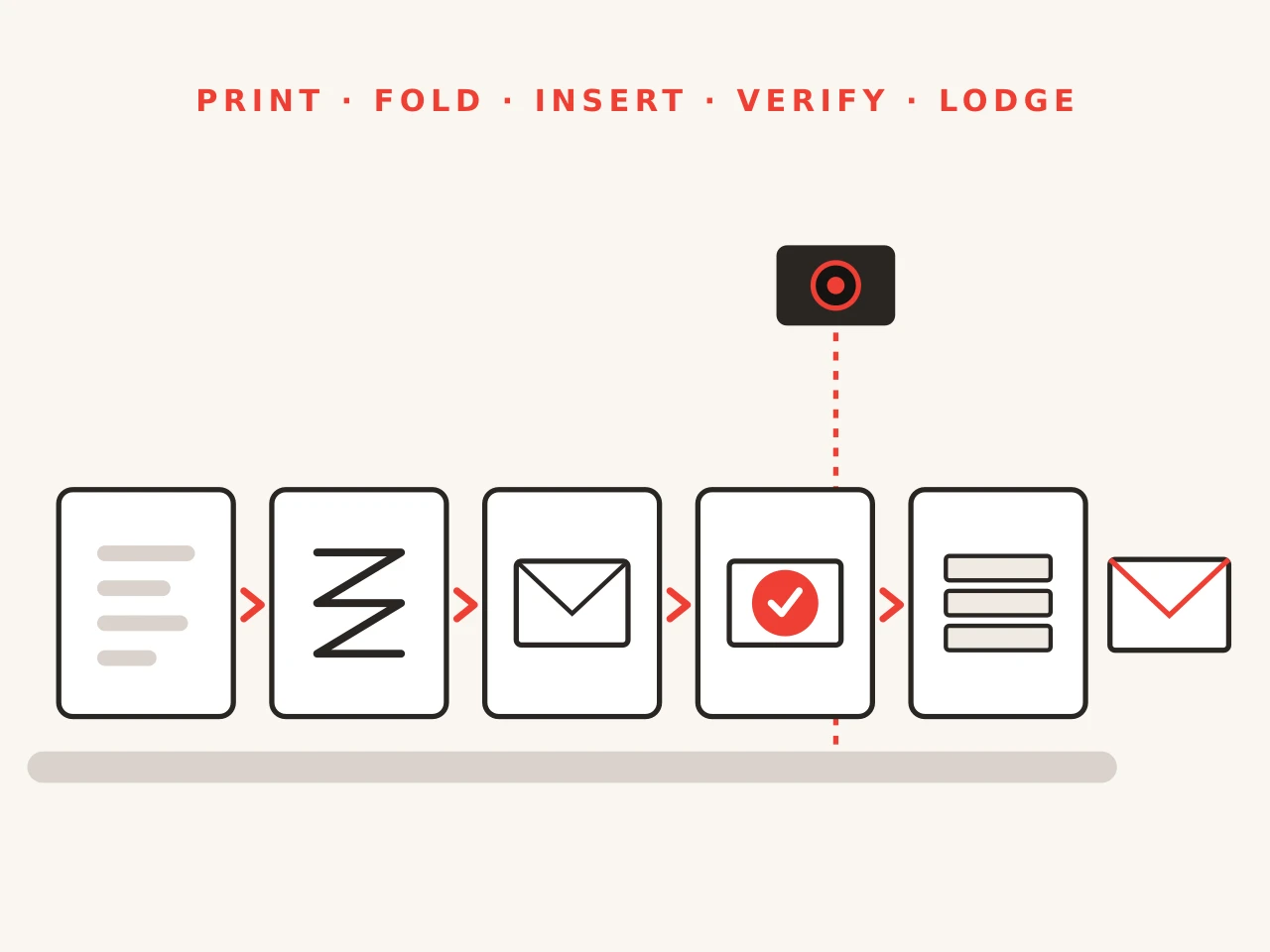
The usual division of labour holds. The agency owns the target estate, the offer and the call to action. The partner owns lettershopping, which is the end-to-end production of personalised mail: variable-data printing, folding, insertion and sealing, handled as one controlled process. We break that line down step by step in a companion piece on producing a compliant mailer.
What Singapore adds is a compliance line running across both.
- The KEO approves a version of the artwork. The partner has to print that version, and be able to show which one went out.
- A QR code or campaign landing page is an advertisement too. Paragraph 7.1 carries the licence and registration requirement onto estate agents' websites and other marketing or information websites.
Speed is the one industry claim worth qualifying. Fast turnaround is real, and much of what fulfilment buys. But the trigger agents reach for, a record price down the road, is the one paragraph 6 will not let them name. It protects a launch window or an expiring listing. It does not license a mailer that could not lawfully be printed at any speed.
Before your next mailing
Three things are worth settling, whoever produces the work.
- Decide which of the two products you are buying, and write it on the brief. A campaign that drifts between unaddressed coverage and addressed mail is the one that draws a complaint.
- For anything addressed, name the lawful basis for each list. Record where the addresses came from. If nobody at the agency can answer that, the list is not ready to mail.
- Ask your fulfilment partner how personal data is transferred, held and purged, and for the reconciliation record from a completed run. Under the PDPA the agency stays accountable for what its intermediary does with the file.
One thing to watch. PDPC's real estate guidelines date from 2014, and predate the 2020 amendments to the PDPA. They are the clearest published account of how these rules apply to property marketing, and the most likely part of this to be refreshed. What an agency may do with its own client list is where a change would land.
This article describes published regulatory and industry material for general information and is not legal advice. Positions cited are current as at 4 August 2026. Whether a particular list or mailer is compliant is a question for your compliance adviser, not for a lettershop.
Tags